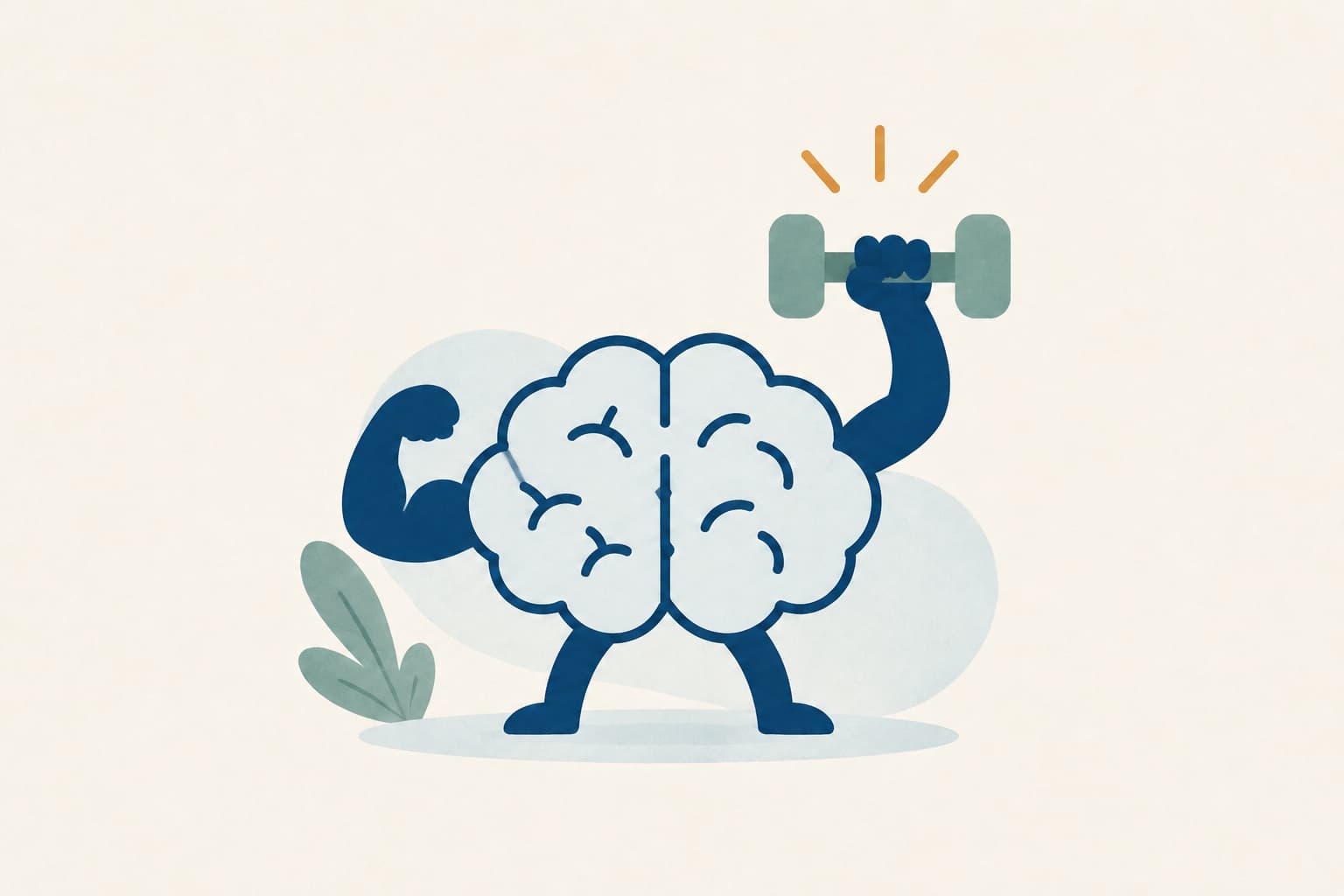
Put an arm in a cast for six weeks and the muscles shrink. Walk on a leg every day and it stays strong. The brain works on the same rule. Connections that fire stay strong. Connections that don't weaken and fade.
When students use AI to do the thinking, it becomes like a cast on the brain. The work that would have grown new neural connections and strengthened existing connections gets skipped. The pattern most parents start to notice: a child who can produce the work but can't explain it.
The good news: it's preventable, and you can check for it tonight in about ten minutes.
What's really happening
Researchers call this cognitive offloading — handing thinking off to an outside tool. Two recent studies measured what it does to young brains.
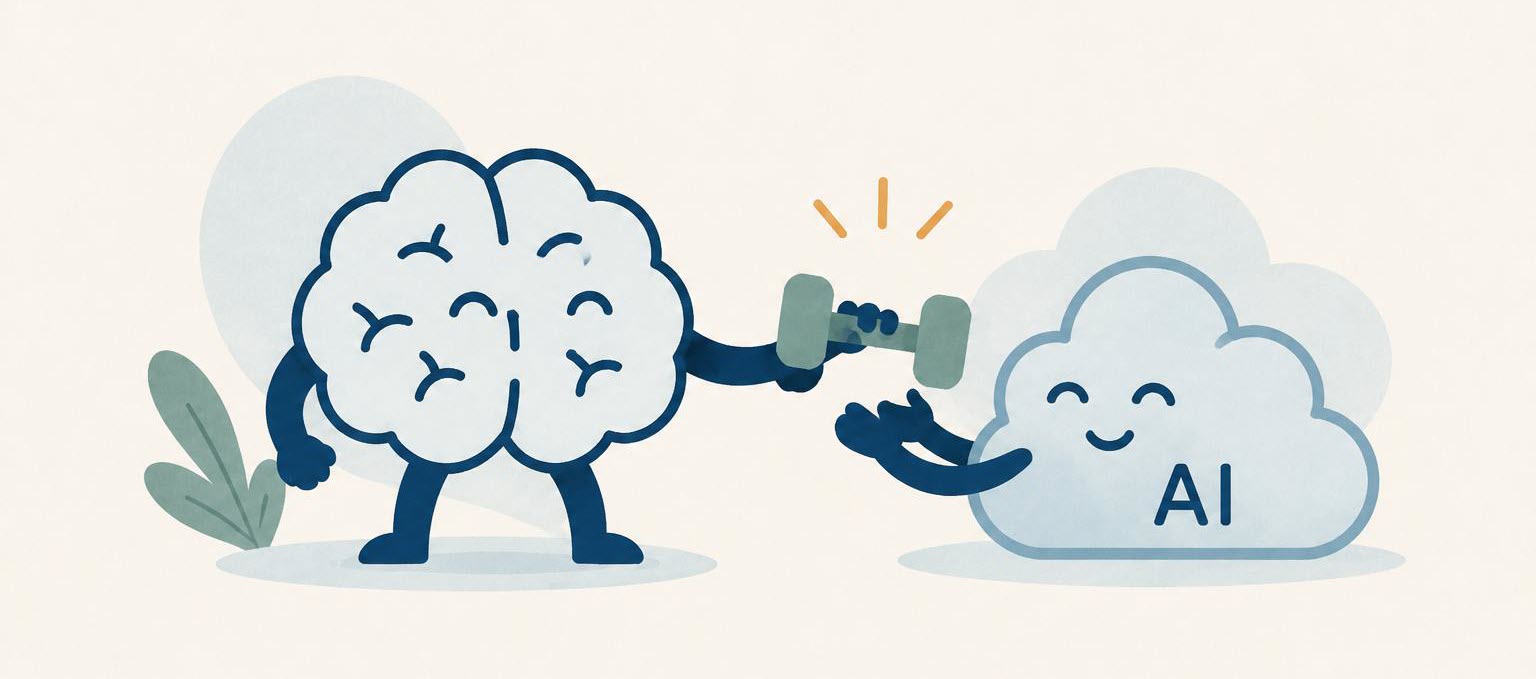
A 2025 study published in the journal Societies surveyed over 600 people using a standardized critical-thinking assessment. It found a strong negative correlation between AI use and critical thinking, with the youngest users (17–25) most affected. The paper uses the word "atrophy" directly: as people rely on AI tools, their internal cognitive abilities "may atrophy, leading to diminished long-term memory and cognitive health."
An MIT Media Lab study used EEG to track 54 students writing essays across four sessions. AI users showed the weakest brain connectivity — the equivalent of low engagement. More than 80 percent of them couldn't accurately quote what they had just written. The work of thinking had not been done.
First, avoid generic questions like "What did you learn today?" — that usually gets a conversation-ending "Nothing." Instead, pick one of these:
- Something your child studied for a test
- A chapter they read for class
- A homework question they answered with AI's help
- An essay or assignment they wrote with AI's help
Sit with them tonight. Tell them you want to understand what they worked on. Then say:
"Without looking at it, tell me in your own words what you learned, or what you wrote, and why."
Listen carefully. The signals are clear:
- Fluent explanation, specific details, can defend their choices — the thinking happened.
- Vague summary, hesitation, surprise at what they supposedly learned, can't explain why — the thinking was outsourced.
This is not about catching your child. It is about catching the pattern early, while the muscle can still be rebuilt.
The deeper principle
The brain grows and strengthens connections when it is challenged — not when it is comfortable. Lifting the same five-pound weight forever does not build strength; as strength builds, the weight has to get heavier. The same goes for answering the same flashcard question over and over — to build brain power, the questions have to get harder.
AI doing the thinking is one shortcut around the challenge. Flashcard apps that re-ask the same set of questions are another. So are study questions that are too easy. All three feel productive. None of them builds cognitive capacity, because none of them force the brain to work for the answer.
The signal you want to see in studying is challenge. If your child says "this is hard, but I can do it," something is being built. If it feels too easy, almost nothing is.
Next steps
There is a deeper problem with using a general AI chatbot to study for a test. A chatbot can answer questions, but on its own it cannot:
- build a study schedule,
- track what your child has actually learned,
- raise the difficulty as they progress, or
- come back weeks later to reinforce earlier material before a final.
Without those four things, the material your child learns in October is gone by January.
Students who use popular platforms like Quizlet or Chegg have a head start — both have added AI features for generating study questions. But these platforms rarely provide a personalized study schedule, adaptive difficulty, or progressive challenge across the full curriculum.
A system like Blast Learning is built around all four — difficulty adapts as the student gains ground, and earlier material returns on a spacing schedule so it isn't forgotten.
The bottom line
You can't keep AI out of your child's life — but you can make sure it keeps their mind growing stronger instead of doing the lifting for them, and that starts with one question tonight.